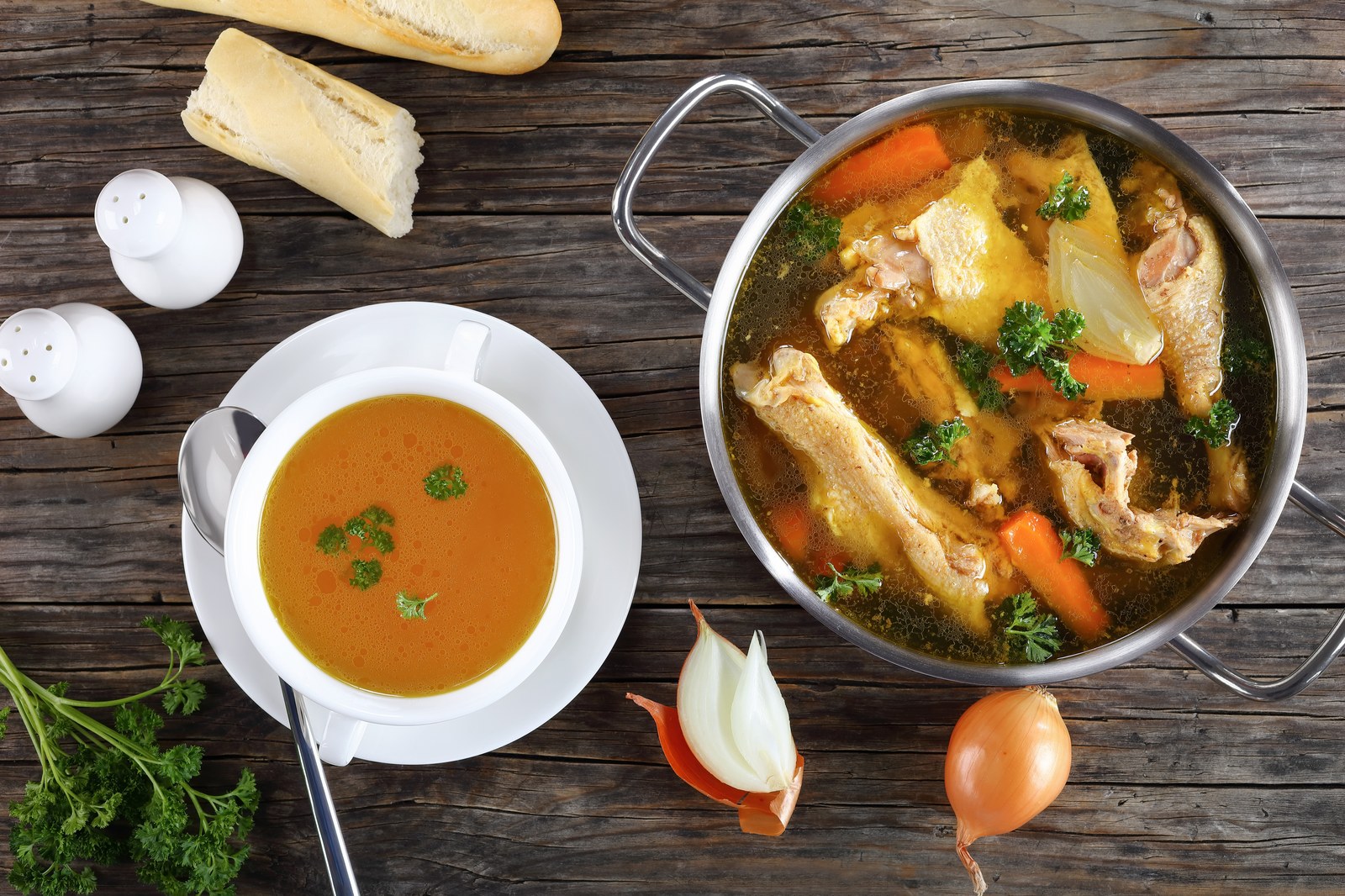
Deeply flavored stock made by gently simmering the picked carcass from Marcella Hazan’s Chicken with Two Lemons with vegetables, herbs, and cold water.
A bare simmer means small, occasional bubbles breaking the surface—not a rolling boil. Aggressive boiling emulsifies fat and breaks down solids, clouding the stock and making it harder to skim. Skim excess foam or fat only when necessary; perfectly clear stock is not required.
If using dried thyme instead of fresh, reduce to 1 teaspoon and add it during the final 30 minutes of simmering. Cool the stock promptly by dividing it among shallow heat-safe containers and refrigerating, or by stirring it over an ice-water bath before refrigerating.
Ingredients
- 1 roasted chicken carcass (from a 4–5 pound Marcella Hazan’s Chicken with Two Lemons; include the wings, skin, bones, and usable scraps)
- cold water (approximately 10–12 cups (2.4–2.8 L); use only enough to cover the carcass by 1 inch (2.5 cm))
- 1 medium yellow onion (the skin adds color and depth to the stock)
- 1 medium carrot
- 2 celery stalk (include leafy tops if available)
- 3 garlic clove
- 2 bay leaf
- 4 fresh thyme sprigs (or 1 tsp dried thyme if fresh is unavailable)
- 1 tsp whole black peppercorns
Instructions
Before you cook
Cook notes
- • A bare simmer means small, occasional bubbles breaking the surface—not a rolling boil. Aggressive boiling emulsifies fat and breaks down solids, clouding the stock and making it harder to skim.
- • Skim excess foam or fat only when necessary; perfectly clear stock is not required.
- • Do not press the solids when straining; let gravity do the work. Pressing releases starch and fine particles that cloud the broth.
- • Cool the stock promptly by dividing it among shallow heat-safe containers and refrigerating, or by stirring it over an ice-water bath before refrigerating.
- • Leave the stock unsalted so it can be reduced or used in another recipe without becoming overly salty.
- • Refrigerate for up to 4 days. The fat will solidify on top and may be removed after chilling or retained for flavor. Freeze the fully chilled stock in ice cube trays, containers, or freezer bags for up to 3 months.
- • If using dried thyme instead of fresh, reduce to 1 teaspoon and add it during the final 30 minutes of simmering.
Ratings
Loading ratings…
Your rating
Have you cooked this?
Comments
Loading comments…
Ready to cook? Or want to explore more recipes?