Kitchen note
The Springform Pan: Why It Deserves a Spot Beyond Cheesecake
A reliable springform pan is the secret to cleanly unmolding delicate tortes, icebox cakes, and savory deep-dish bakes without tipping them upside down.
A heavy collar and a flat, snug base make the difference between a pristine unmolding and a smoking oven floor.
Tested by NoAds Cooking Kitchen Team
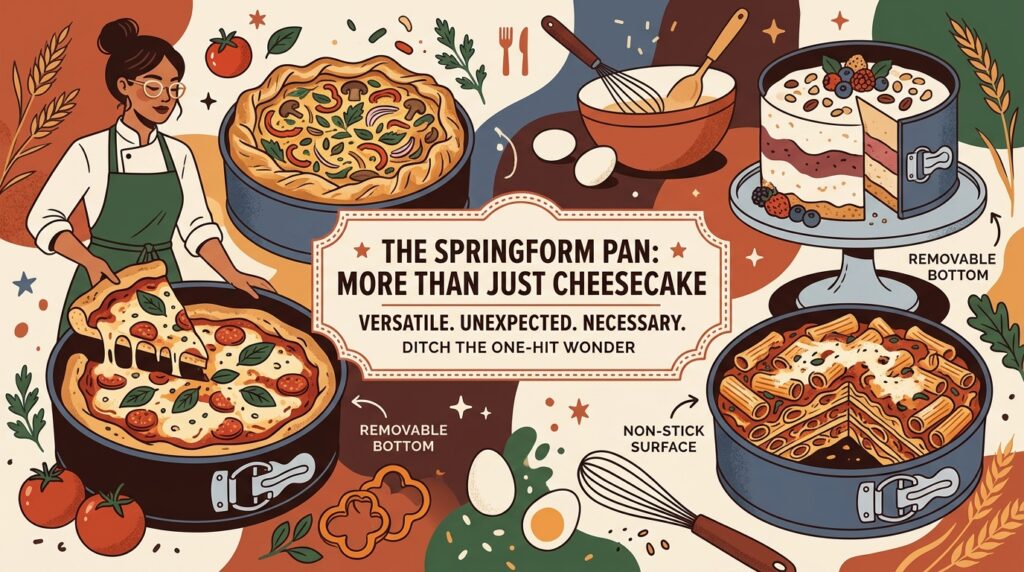
Few kitchen moments are as nerve-wracking as turning a finished cake upside down onto a cooling rack and praying it releases cleanly. That is precisely why the springform pan exists. Designed with an expandable collar that unlatches and pulls straight away from the base, this pan lets delicate, structurally fragile bakes stay right-side up and pristine. While it is famous for classic cheesecakes, a good one earns its cabinet space across sweet and savory cooking all year round.
What to Look for When Buying
Not all springform pans are engineered equally, and a flimsy model will quickly result in leaking butter and warped rings. When shopping, prioritize construction and latch mechanism over gimmicks:
- Gauge and Material: Look for heavy-gauge aluminized steel or thick carbon steel. Flimsy aluminum bends easily, preventing the collar from sealing properly against the base. A medium-toned nonstick coating ensures an easy release without over-browning the crust before the center sets.
- Size: A 9-inch pan with sides at least 2.5 to 3 inches tall is the standard workhorse for the vast majority of recipes. If you frequently bake for two or prefer tall, European-style tortes, an 8-inch pan is a worthy alternative.
- The Latch and Base Fit: Inspect the buckle mechanism. It should clamp shut with firm resistance, not a loose click. The base should sit snugly in an engineered groove; models with a slight lip or waffle texture on the base provide added stability and prevent batter seepage.
How to Use It Well in Everyday Cooking
If your springform pan only comes out during the holidays for cheesecake, you are underutilizing it. Its tall walls and clean release make it ideal for several everyday kitchen projects:
- Flourless Tortes and Delicate Cakes: Dense chocolate tortes, almond meal cakes, and Swedish sticky cakes lack gluten structure and will crumble if inverted. A springform collar pulls away without disturbing the edges.
- Layered Icebox and Gelatin Desserts: Assemble tiramisu, layered no-bake berry trifles, or mousse cakes in the ring, chill thoroughly, and unclasp for dramatic, bakery-case cross sections.
- Deep-Dish Pizza and Savory Pies: A springform pan provides the structural support needed for Chicago-style deep-dish pizza, tall quiches, and pasta pies like timballo, letting you slice clean wedges without digging into a deep ceramic baker.
Tip
To guarantee an effortless transfer from pan to platter, clamp a sheet of parchment paper flat across the base before closing the collar, letting the excess paper stick out beneath the rim. Once baked and chilled, you can slide an offset spatula under the parchment and glide the cake directly onto your serving board.
Care, Storage, and Common Mistakes
Water baths are the most common source of frustration. Even pans marketed as fully leakproof can draw in moisture through the microscopic seam when submerged in a roasting pan full of hot water. Rather than trusting foil alone—which often tears—place your latched springform pan inside an oven-safe silicone sleeve or a slightly larger regular cake pan before setting it into the water bath.
Always wash springform pans by hand. Dishwashers trap water beneath the rolled edges of the collar and behind the latch rivet, which quickly triggers rust. After washing in warm, soapy water, towel-dry the pieces and place them in a still-warm, turned-off oven for five minutes to evaporate hidden moisture.
Finally, store the pan unbuckled or loosely clasped. Keeping the metal under full tension while sitting stacked in a dark cupboard for months can weaken the spring mechanism and subtly warp the collar out of round.