
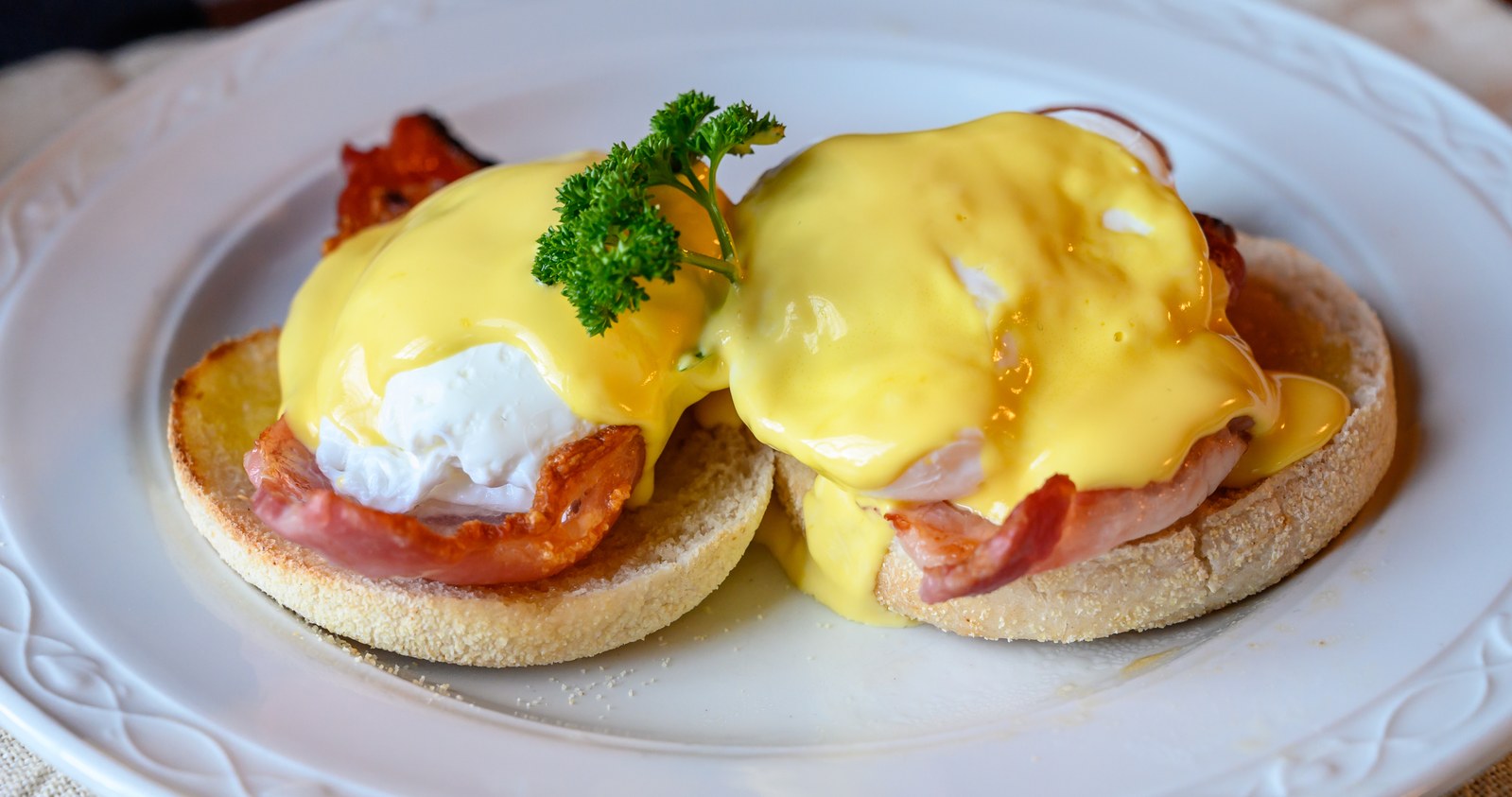
Morning light through dining room windows carries a specific anticipation, particularly when a heavy skillet warms on the stove and the gentle perfume of melted butter begins to fill the kitchen. While weekday breakfasts demand convenience and swift execution, the weekend breakfast holds space for something far more deliberate. Few plates capture that deliberate indulgence quite like Eggs Benedict. It sits on the table as an architectural balance of contrasting textures and temperatures: the jagged, golden crags of a toasted English muffin cradling warm, smoky Canadian bacon, topped with a softly quivering poached egg draped in a rich, warm, velvety cloak of hollandaise sauce.
To cut into an expertly constructed Benedict is one of home cooking’s supreme pleasures. The yolk ruptures in a slow, glossy cascade, mingling instantly with the lemon-bright richness of the emulsion to saturate the nooks and crannies below. Yet for many home cooks, the dish remains sequestered behind restaurant doors, guarded by the intimidation of simultaneous egg poaching and delicate emulsion making. In reality, mastering this culinary hallmark requires neither professional restaurant equipment nor sorcery—only an understanding of temperature, sequencing, and kitchen tempo.
Eggs Benedict is the undisputed crown jewel of late-morning dining, balancing crisp toasted English muffins, seared Canadian bacon, tender poached eggs, and a vibrant lemon-butter hollandaise emulsion. Rooted in late-nineteenth-century Manhattan, this classic recipe relies on simple, disciplined kitchen timing and temperature control rather than complicated machinery.
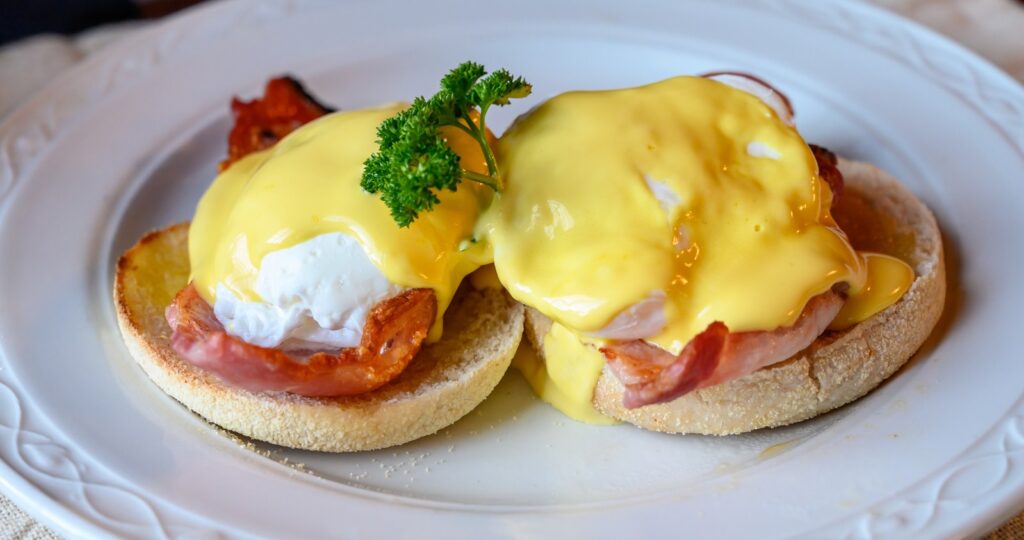
Eggs Benedict: The Gilded Age Masterpiece That Defined Brunch
The Gilded Age Mystery: Two Dining Rooms, One Masterpiece
Few dishes have a more delightfully disputed origin story than Eggs Benedict. The most colorful version traces back to 1894, when Lemuel Benedict—a Wall Street broker nursing a hangover—shuffled into the Waldorf Hotel in New York City and ordered ‘buttered toast, poached eggs, crisp bacon, and a hooker of hollandaise.’ The maître d’hôtel, the legendary Oscar Tschirky, was so taken with the combination that he refined it slightly, swapping the toast for English muffins and the bacon for Canadian bacon, and added it to the Waldorf’s menu permanently.
The competing claim is only slightly less dramatic. Banker LeGrand Benedict and his wife reportedly grew bored with the menu at the storied Delmonico’s restaurant around 1893 and challenged the chef to create something new for their breakfast. The result, developed collaboratively at the table, was remarkably similar: English muffin, ham, poached egg, hollandaise. Both Delmonico’s and the Waldorf were the crown jewels of Gilded Age New York dining, and both claims have documentary support—which means the dish was almost certainly an idea whose time had simply come.
What is undisputed is the cultural moment Eggs Benedict represents. The late 19th century saw wealthy New Yorkers pioneering the concept of the leisurely late-morning meal—what would eventually become ‘brunch’—and Eggs Benedict became its signature dish. The combination of rich hollandaise, runny poached egg, smoky Canadian bacon, and crisp English muffin is a study in contrasts that rewards both the cook’s technique and the diner’s patience. More than 130 years later, it remains the gold standard of brunch menus everywhere.
In both historical accounts, the genius lay in turning an ad-hoc arrangement of pantry staples into an elevated dining spectacle. The Victorian breakfast table had long favored heavy roasts, kippers, and stiff porridges. Eggs Benedict broke away from that solemn tradition, offering bright acidity, silky richness, and an airy lightness that paired effortlessly with fresh coffee and sparkling conversation.
Why This Recipe Works: The Architecture of Contrasts
The endurance of Eggs Benedict over thirteen decades rests on sound culinary architecture. Each layer serves a structural and sensorial role that prevents the dish from turning into an unwieldy puddle of fat or an overly tough mouthful of bread. The foundation begins with the English muffin. Unlike dense artisan sourdough or spongy white sandwich bread, a fork-split English muffin presents an uneven topography of ridges and crevices. When toasted until deeply browned and crisp, it holds its structural integrity beneath liquid yolks and warm sauce, offering a satisfying crunch against the softer components above.
Next comes the Canadian bacon, also known in many culinary traditions as back bacon. Cut from the leaner loin rather than the fatty belly, Canadian bacon offers savory depth, curing spices, and gentle wood smoke without introducing excessive grease. When lightly crisped in a hot pan, its flat disc acts as a heat barrier between the toasted muffin and the moisture of the freshly poached egg, preventing the bread from becoming soggy before it reaches the table.
Above the bacon sits the poached egg, suspended at the exact threshold where the white is completely set and tender while the yolk remains fully fluid and warmed through. When the knife pierces the center, the warm yolk behaves as a natural second sauce, joining forces with the hollandaise. The hollandaise itself is an emulsion of egg yolks, clarified or melted butter, fresh lemon juice, and a pinch of cayenne. Its function is not merely to add richness, but to inject necessary acidity. The bright citrus and subtle warmth cut through the substantial richness of the egg and pork, cleansing the palate with every bite.
A true hollandaise is an emulsion of fat in water: butter droplets suspended uniformly in egg yolk and lemon juice. Keep the heat gentle and steady, between 130°F and 145°F, to allow the yolks to thicken without scrambling.
Skill Tiers: Approaching Eggs Benedict with Confidence
At NoAdsCooking, dishes are organized into clear skill tiers—Classic, Enhanced, and Chef’s Selection—allowing you to cook according to your current comfort level and available time. Our Classic preparation focuses on traditional techniques, keeping the ingredient roster faithful to the original Gilded Age vision while teaching you how to coordinate the timing smoothly at home.
For cooks exploring the Classic tier, the greatest challenge is not the complexity of any individual step, but rather the choreography of bringing four hot, time-sensitive elements together at the exact same moment. The secret lies in the order of operations. First, prepare your hollandaise and keep it warm in a gentle water bath or an insulated thermos. Next, warm your plates and toast your muffins. Pan-sear the Canadian bacon, and finally, poach your eggs so they slide directly from their warm cooking liquid onto the awaiting, assembled base. Approached with this calm sequence, the dish transitions from an anxious juggling act into a rhythmic, rewarding morning ritual.
Essential Technique: Poaching and Emulsion
To achieve pristine poached eggs with taut, compact whites, freshness is paramount. An egg straight from the farm or freshly purchased has tight, viscous albumen that hugs the yolk tightly. Older eggs develop watery outer whites that break into feathery ribbons when dropped into simmering liquid. If your eggs are a few days old, crack each one into a fine-mesh strainer first; allowing the thin, watery albumen to drain away leaves behind only the firm core, resulting in a smooth, restaurant-quality teardrop shape.
Maintain your poaching water at a gentle bare simmer—small bubbles rising occasionally, rather than an aggressive rolling boil that tears delicate whites apart. A splash of mild white vinegar in the poaching liquid gently lowers the water’s pH, encouraging the proteins to coagulate faster without altering the egg’s delicate flavor. Poach for approximately three to three and a half minutes for large eggs, then lift them with a slotted spoon onto a paper-towel-lined plate to blot away excess water before assembly.
Variations and Thoughtful Serving Ideas
While the traditional build with Canadian bacon remains untouchable in its harmony, understanding the framework allows for playful and seasonal variations that honor the original spirit of the dish.
- Eggs Florentine: Swap the Canadian bacon for a bed of tender sautéed spinach cooked with shallots, nutmeg, and a touch of butter. Squeeze the greens thoroughly to remove excess moisture before layering.
- Eggs Royale (or Atlantic): Replace the pork with thin ribbons of cold-smoked salmon and a scatter of brined capers or finely minced fresh dill across the hollandaise.
- California Benedict: Introduce thin slices of ripe Hass avocado and thick slabs of ripe, salted heirloom tomato beneath the poached eggs for a refreshing, produce-forward summer version.
- Herb-Infused Hollandaise: Whisk finely minced tarragon, chervil, or chives directly into the warm sauce right before serving for a delicate, garden-fresh herbal aroma reminiscent of Béarnaise.
Serve your Eggs Benedict alongside simple, unpretentious accompaniments that complement rather than compete with its decadence. Golden skillet-fried home fries tossed with rosemary and flaky sea salt provide an earthy, crisp counterbalance. A light salad of crisp baby arugula dressed simply with freshly squeezed lemon juice and cold-pressed olive oil offers a peppery bitterness that cuts effortlessly through the rich sauce. Paired with freshly brewed pour-over coffee or dry sparkling wine, it transforms any morning into an occasion worthy of the finest Gilded Age dining rooms.
Master the Ultimate Brunch Classic at Home
See the full ingredient list and step-by-step method.
View the Eggs Benedict Recipe