
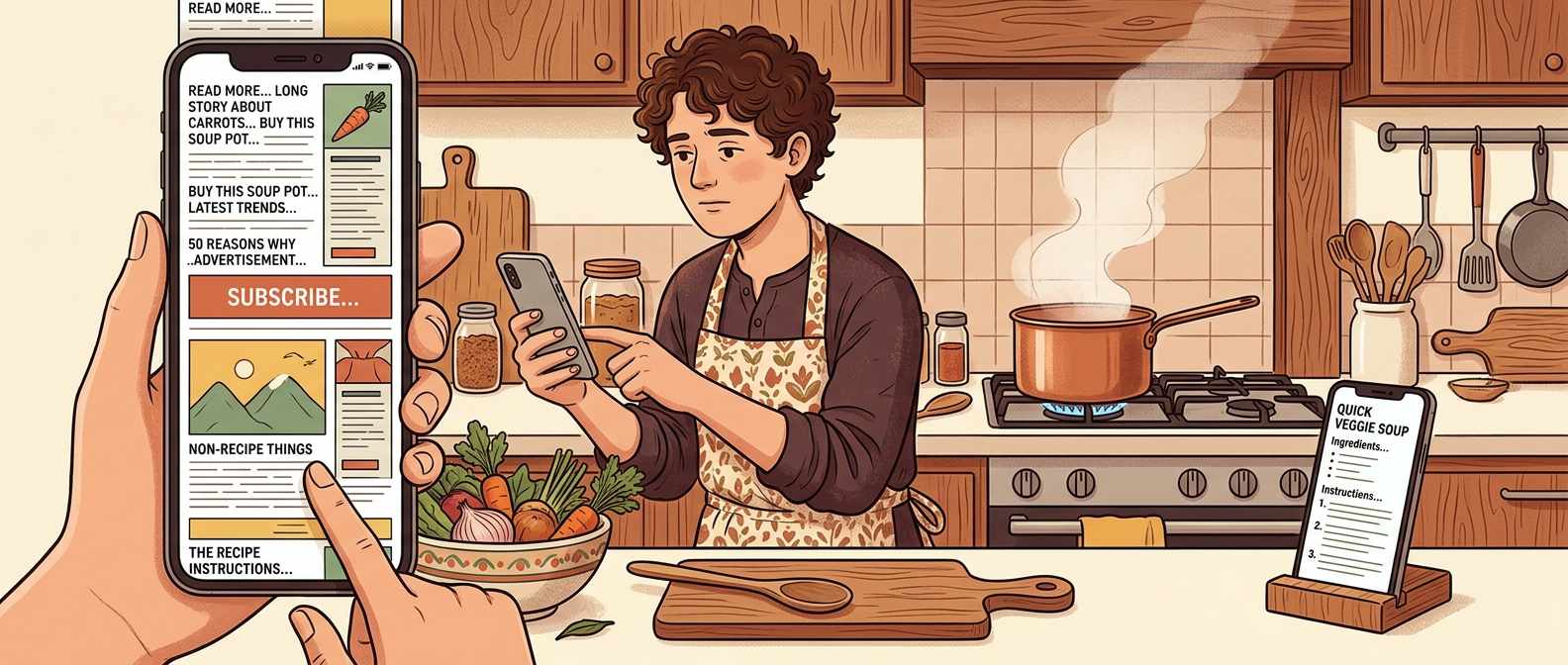
Why do recipe sites make you scroll so far?
You searched for a pasta recipe. You clicked a result that promised exactly what you wanted. Then you spent the next thirty seconds scrolling past the author’s childhood memory of their grandmother’s kitchen, a note about ingredient substitutions, two ad units, a paragraph about what makes this recipe special, another ad, and a photo gallery of the finished dish — before the first ingredient finally appeared. The “jump to recipe” button at the top of some pages exists specifically because this problem is bad enough that the sites noticed readers abandoning the scroll.
Scroll depth drives ad impressions. Every unit above the recipe earns a view only if you scroll past it. A longer preamble means more units in view before you reach the content you came for, which means more CPM revenue per visit. The recipe being buried is not a side effect of the story — it is the point of the story’s placement.
How scroll depth makes money
Impressions require viewability: an ad only counts as an impression when it is actually on screen. Units stuffed below the fold are worth less — or nothing at all — if readers never scroll past them. Pushing the recipe down the page forces readers to scroll through more ad inventory on their way to the content they wanted.
Time on page signals engagement: platforms that serve ads also pay more for inventory on pages with higher engagement metrics. A long scroll before the recipe inflates time-on-page numbers, which can improve the site’s ad rate regardless of whether the reader found the extra content useful.
Content fills the space because it has to: a page that showed two paragraphs and then the recipe would have almost no ad inventory above the fold. The long intro, the background story, the tips section, and the FAQ at the bottom all exist in part because they create space for more units. Some of it is genuine — writers have things to say — but the structural incentive is not neutral.
The “jump to recipe” button is an admission. It exists because the pre-recipe content is long enough that readers regularly give up without it. The site built the problem and then added a workaround rather than removing the problem.
Why it keeps getting worse
- SEO rewarded length: for a long stretch, longer pages ranked better in search results because length was used as a proxy for depth and authority. Publishers wrote more, and the habit of long pages became the default format even as the ranking signals changed.
- More units were added as rates fell: as CPMs declined, sites kept revenue up by adding more slots per page. More slots require more page — you cannot stack ten ad units into two paragraphs without the page looking obviously broken.
- Affiliate and SEO content inflated pages further: “related recipes,” ingredient buying guides, and FAQ sections often serve dual purposes — filling page length and earning affiliate clicks. They add scroll depth with minimal editorial effort.
- Readers adapted rather than left: the “jump to recipe” button reduced the friction just enough that most people stayed. Reducing friction for the reader without reducing the length for the advertiser is a clean outcome for the site.
What you can do
Use the jump link when it exists: it is a compromise, not a solution, but it works. On sites that offer it, the button skips the preamble and anchors directly to the recipe card. You still load the full page, ads and all, but you do not have to scroll past them manually.
Search for the recipe card directly: on mobile, using the browser’s find-in-page tool to search for “ingredients” or the name of the first ingredient will jump you close to the recipe without reading the rest. Clumsy, but faster than scrolling.
The structural alternative is a site where there is no financial reason to bury the recipe. NoAdsCooking does not need scroll depth to make money, so the recipe starts where the page starts.
Recipe at the top. Not the bottom.
NoAdsCooking has no ad inventory to protect above the fold, so nothing gets between you and the recipe.
Browse recipes, no ads