
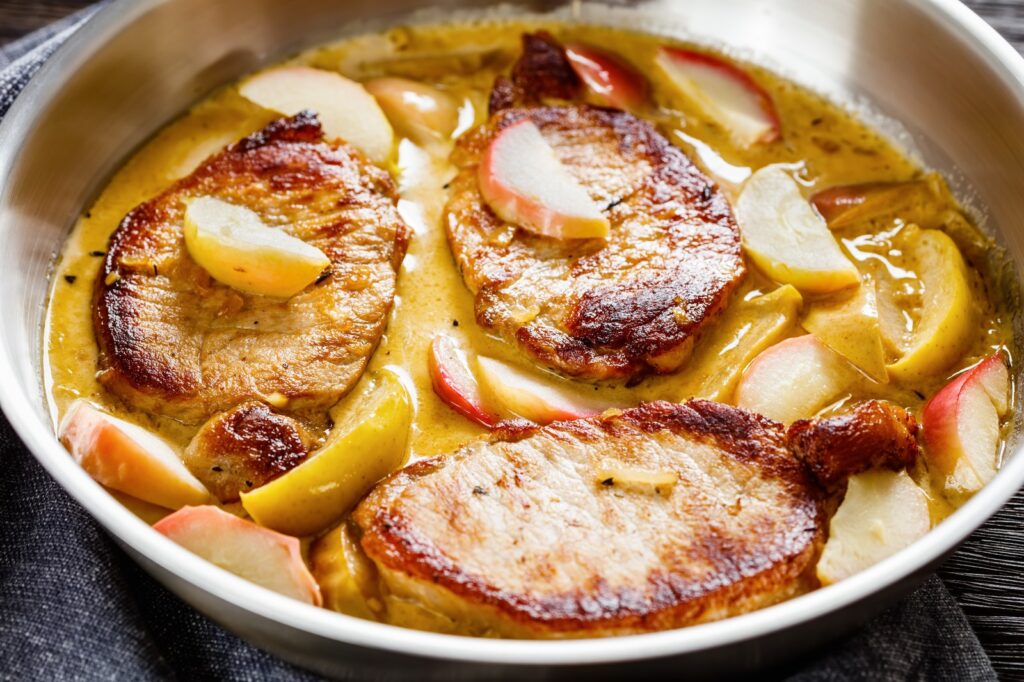
Cider-brined pork chops stay remarkably juicy beneath a browned crust, with caramelized apples and a sharp, savory cider pan sauce.
These Pork Chops Made Me a Believer
A lot of us approach center-cut pork chops with trepidation. The margin between tender meat and dry cardboard can feel razor-thin, particularly with today’s exceptionally lean supermarket pork. And honestly a lot of my "these are good" pork chops were just versions of something that did not go totally wrong. That's not why we make food, to dodge a catastrophe and call it a victory.
It’s no secret that lean pork needs help retaining moisture, but how? This recipe answers that question with a cold cider brine, a hard sear, and a pan sauce built from caramelized apples. The whole cook is surprisingly easy, packed with flavor, and shockingly affordable.
The Gist
Brining gives lean pork the best shot of being great. Drying the chops thoroughly and leaving them alone in a hot skillet creates the crust, while apples, cider, and chicken stock transform the fond into a glossy pan sauce.
Recipe spotlight: View the complete method for Cider-Brined Pork Chops with Caramelized Apples and Apple-Cider Pan Sauce for the full ingredient list, brining ratios, and step-by-step instructions.
I Had No Idea Pork Chops Could Be This Good
I made these the other night, and they were exceptional. Honestly, I had no idea a pork chop could be this rewarding, or easy to pull off.
The result surprised me enough that I immediately started asking friends, “Have any of you ever tried brining pork?”
“Heard of it. someone I know swore by it, never tried it.”
“I’ve never even made pork. My mom would make it and it was always dry and not good.”
“My mom tried making pork chops, they never turned out.”
Then, finally, one emphatic reply: “Yes! Yummmmmm!”
My suspicion appeared to be correct: people need to know about this.
The economics made the discovery even better. I bought six thick pork chops from Kroger for $10. This wasn’t marked-down or questionable meat. It also wasn’t the $24 short rib I had cooked a few nights earlier, which barely fed two people, required more work, and while very good, didn’t leave nearly the same lasting impression.
This was one of those dishes that compels you to take the next bite immediately. The strangest part was that the pork didn’t feel dramatically different beneath the knife from the dry, overcooked chops I remembered. With every bite, I kept expecting the disappointment to arrive. It never did.
I even made the chops again the next night. They were just as good reheated, possibly better.
Somehow, I am now a firm believer in the pork chop, and I will happily add this value main course to the regular shopping list.
Why a Cider Brine Works
Pork and apples have shared the table across northern Europe for centuries, especially in places where the autumn apple harvest coincided with the traditional butchering season. The combination endured for a practical culinary reason: tart fruit balances pork’s richness, while its sweetness complements the meat’s savory flavor.
That same balance drives this recipe.
Center-cut chops come from the lean loin, which can lose moisture quickly when exposed to high heat. Salt changes the structure of the meat’s proteins, helping them retain more liquid as they cook. Cider contributes acidity, gentle sweetness, and apple flavor, while brown sugar, peppercorns, and thyme add aromatic depth.
After heating the brine to dissolve the salt and sugar, let it cool and then chill it completely before adding the pork. Warm brine creates an unnecessary food-safety risk and can compromise the meat’s texture.
Once the chops leave the brine, dry them thoroughly with paper towels. A damp surface produces steam; a dry surface browns. Removing that moisture is one of the most important steps in developing a proper crust.
The Skillet
The entire dish comes together in one heavy stainless-steel or cast-iron skillet. Follow the order of operations: sear the pork, caramelize the apples, and then deglaze the pan.
Place the dried chops in shimmering oil and resist the urge to move them. Let the first side develop a deep crust and release naturally from the pan before flipping. Cooking time will depend on the thickness of the chops and the heat of the skillet, so rely on browning and internal temperature rather than the clock alone.
Cook the pork to an internal temperature of 145°F, then transfer it to a warm plate or carving board and let it rest for at least three minutes. Pork guidelines have changed over the years, and stopping at 145°F gives the chops a much better chance of remaining juicy than pushing them all the way to 160°F.
The skillet will now contain rendered fat and a layer of deeply browned fond. Lay the apple wedges directly in that seasoned fat and allow their cut surfaces to caramelize before stirring. This gives them browned edges while helping the slices remain distinct rather than collapsing into applesauce.
Add chicken stock and fresh cider to the hot skillet, scraping up the fond as the liquid begins to simmer. As the sauce reduces, its savory and tart flavors concentrate. What remains is a glossy cider reduction that coats the pork without requiring a heavy flour thickener.
What to Serve with Cider-Brined Pork Chops
Caramelized apples can push a plate toward sweetness, so the best accompaniments provide salt, bitterness, or acidity.
Braised cavolo nero, escarole, or mustard greens cooked with garlic offer an earthy counterpoint to the cider glaze. Their slight bitterness cuts through both the fruit and the richness of the pork.
Keep the starch rustic and savory. Crushed roasted fingerling potatoes, stone-ground polenta with aged cheese, or steamed cabbage with caraway would all work well. A spoonful of whole-grain mustard alongside the pork adds another sharp note that keeps the plate balanced.
We had baked beans and did not look back.
Bring Back the Chops
These chops don’t require complicated equipment or a difficult restaurant technique, but they will taste like a $50 plate. The transformation comes from three manageable stages: brine the pork, let it brown undisturbed, and turn the fond into a sauce.
The result is the pork chop many people have no idea is possible: deeply browned, genuinely juicy, economical, and balanced by tart cider and caramelized apples.
Make it once, and you won’t be able to stop wondering how soon is too soon to make it again.
Make the Cider-Brined Pork Chops
Get the complete ingredient list and step-by-step method.
Explore More Ad-Free Cooking
Browse dozens of reliable Classic weeknight staples and Enhanced weekend dinners without ads, popups, or video clutter.
Browse All Recipes