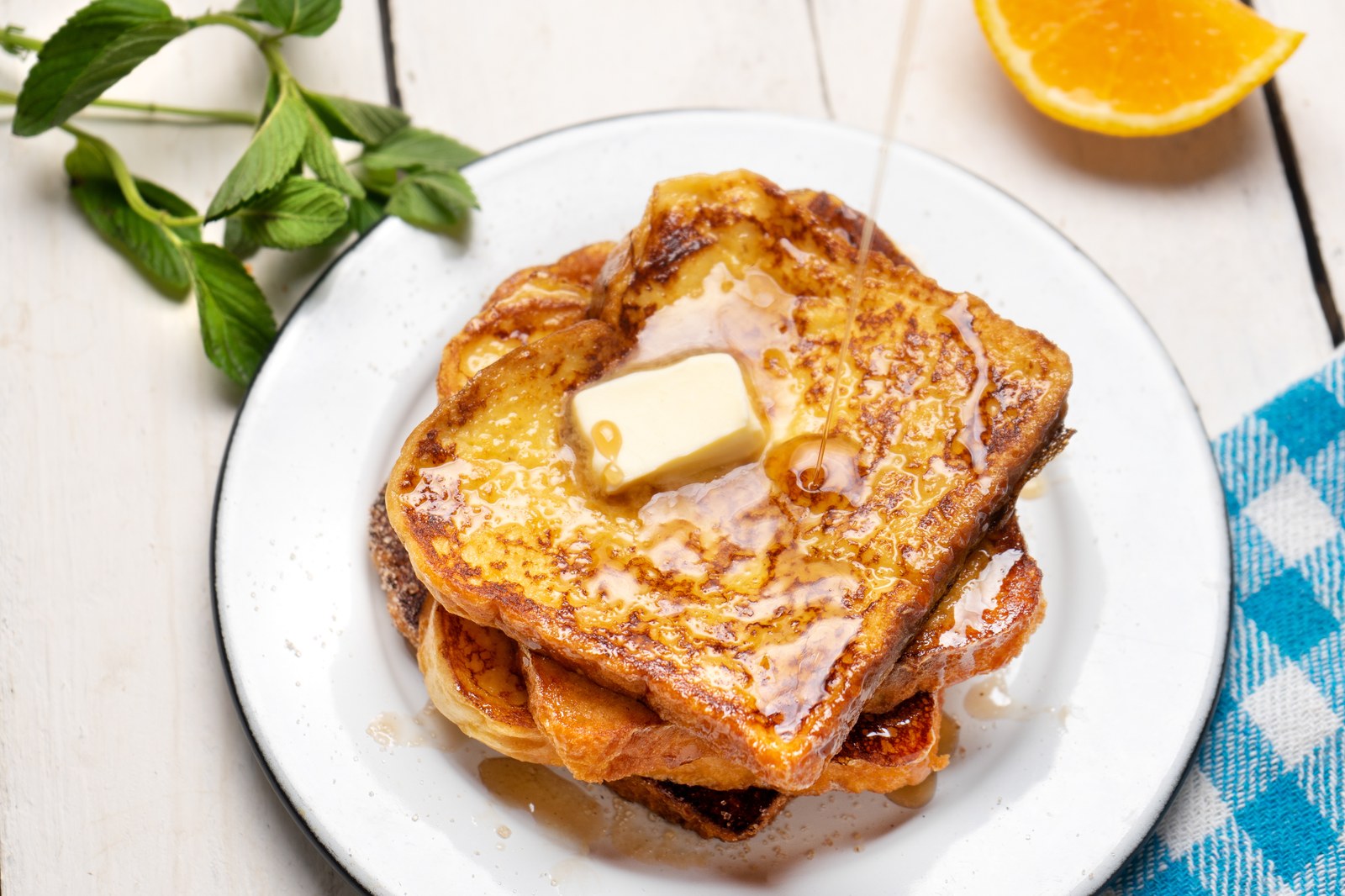
French Toast is often approached with a sense of haste, submerging whatever sandwich loaf sits on the counter into beaten eggs and immediately slapping it onto a smoking skillet. The result is almost always an edible product but a failure of texture: a burnt outer skin of scrambled egg surrounding a cold, raw, a core that can turn to mush under the weight of syrup.
The dish requires an entirely different mental model. French toast succeeds not as fast fried bread, but as an internally baked custard structured by day-old crumb and gentle, regulated heat. When you view the process as building a self-contained bread pudding in a skillet, every operational choice shifts, from loaf selection to pan temperature.
Soggy centers and scorched crusts stem from rushing the cooking process. Use sturdy day-old bread, soak each side for twenty to thirty seconds, cook over medium heat to set the interior custard, and rest slices on a wire rack to preserve edge crispness.
French Toast Done Right: Golden Edges, Custardy Centers, Never Soggy
From Roman Leftovers to Diner Counters: The Arc of Saving Lost Bread
The practice of reviving stale bread is as old as organized baking. In the fourth century, the Roman collection attributed to Apicius documented slices of fine white bread soaked in sweet milk before frying in oil, creating a rich carbohydrate base long before chickens were bred for reliable morning egg production. That Roman version was strictly about softening wheat that had dried into stone, using available fat to reintroduce caloric density.
By the fifteenth century, European kitchens had formalized the technique into pain perdu, or lost bread. In medieval households, throwing away a loaf of wheat bread was a profound financial loss. Cooks found that whipping eggs with milk created a protein-rich wash that bound to dried starches, forming a cohesive sponge that puffed when met with hot animal fat or butter. The French refined the aromatic profile by introducing warm baking spices, establishing the baseline ratio that remains standard across home cooking today.
English colonists brought these habits to North America, where the dish became an eighteenth-century domestic staple. The term French toast first appeared in print in American cookbooks during the 1870s, differentiating the egg-enriched recipe from plain fried bread. As the dish moved into early twentieth-century diners and Creole kitchens in New Orleans, regional cooks adapted it with powdered sugar, thick syrup, and heavy cream. Throughout centuries of shifting pantry access, the underlying premise stayed constant: rescuing expired starches through controlled custard absorption.
Crumb Density and Custard Ratios: The Science of the Soak
The physical structure of your bread determines whether the finished slice holds its form or falls apart on the spatula. Fresh bread is plump with free water, meaning its gluten matrix is already saturated and delicate. When fresh bread hits an egg wash, the capillary channels quickly rupture, creating a gluey outer layer that seals off the center from soaking while simultaneously dissolving the slice into paste.
Day-old bread, by contrast, has undergone retrogradation. As moisture evaporates, the starch molecules realign and firm up, leaving dry, open pockets throughout the crumb. When submerged, this dehydrated matrix acts like an unexpanded sponge, drawing the liquid custard deep into the center of the slice without dissolving the surrounding walls of gluten. The bread maintains its structural integrity throughout the cook, ensuring the final texture mimics a baked soufflé rather than wet dough.
The custard itself relies on a precise suspension of whole eggs and dairy. Whole eggs supply both albumin for structural firming and yolk lecithin for emulsifying milk fats. Ground cinnamon must be whisked thoroughly to distribute its hydrophobic oils across the liquid surface. The Classic French Toast formulation maintains this exact balance, demanding culinary discipline rather than excessive garnishes to produce a unified crumb.
Medium Heat and the Wire Rack: Managing Thermal Dynamics
Thermal management is the stage where most cooks compromise their results. A high-heat skillet chars the butter solids and coagulates the exterior egg proteins within ninety seconds, leaving the interior dairy mixture raw and cold. Cooking over medium heat allows thermal energy to travel inward, raising the core temperature of the bread to the coagulation point of egg proteins without blackening the crust.
The soak itself must be measured with intention rather than intuition. Submerging day-old slices for twenty to thirty seconds per side gives the dried crumb enough time to pull the custard into its interior pockets without water-logging the center. Leaving bread in the bowl for minutes at a time turns the core into heavy liquid weight that no skillet can properly bake through before the surface burns.
Once the slices leave the pan, their handling dictates final crunch. Stacking cooked toast on a plate or laying it across paper towels traps escaping steam against the hot crust, instantly turning crisp, butter-fried edges soft and wet. Resting the finished slices on an elevated wire rack lets moisture dissipate freely from both sides, keeping the buttered exterior firm while the internal custard settles into a velvety crumb.
Striking the Flavor Balance: Acid, Salt, and Crisp Textures
Because French toast centers on dairy, egg fats, and toasted starches, the dish risks feeling heavy if paired exclusively with cloying toppings. A generous pour of synthetic syrup over unseasoned bread overwhelms the palate with flat sweetness. A thoughtful plate introduces contrasting textures and acidity to cut through the rich, custardy interior.
Cultured salted butter provides a crucial counterweight to sweet maple syrup, delivering clean dairy fat alongside salinity that sharpens the vanilla notes in the custard. Fresh, tart berries or a squeeze of lemon juice bring organic acids that break up the richness of the griddled egg. These acidic accents ensure that every mouthful remains refreshing rather than heavy.
Ultimately, great French toast does not rely on novel tricks or theatrical breakfast garnishes. It succeeds on its own merits when you respect the balance between stale crumb, controlled soak times, and moderate pan heat. When treated as an internally baked custard structured by day-old crumb and gentle, regulated heat, the humble breakfast staple becomes an extraordinary exercise in foundational technique.
Master the Classic French Toast Method
See the full ingredient list and step-by-step method.
View the French Toast Recipe